
Generational Shift
A Worker's Comparison of the 2020 Chevy Express and 2020 Ford Transit.

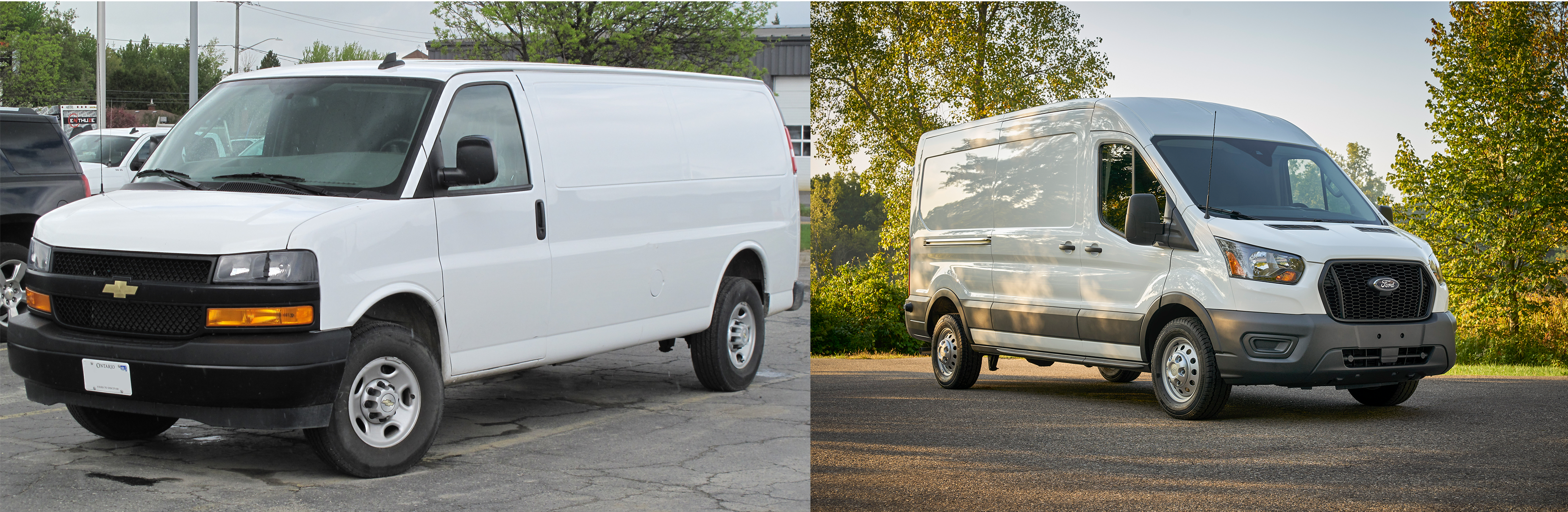
During my day job, I work as an IT contractor. There’s all kinds of jobs we do away from a desk – hardware installation, running wires, event setup… the list goes on. As versatile workers, we rely on a versatile vehicle to carry our tools and supplies from place to place – the ever-present Chevrolet Express. I’ve spent years loading and unloading these vans, working out of its cargo area in all kinds of weather – a part of the job as unquestioned as the tools inside.
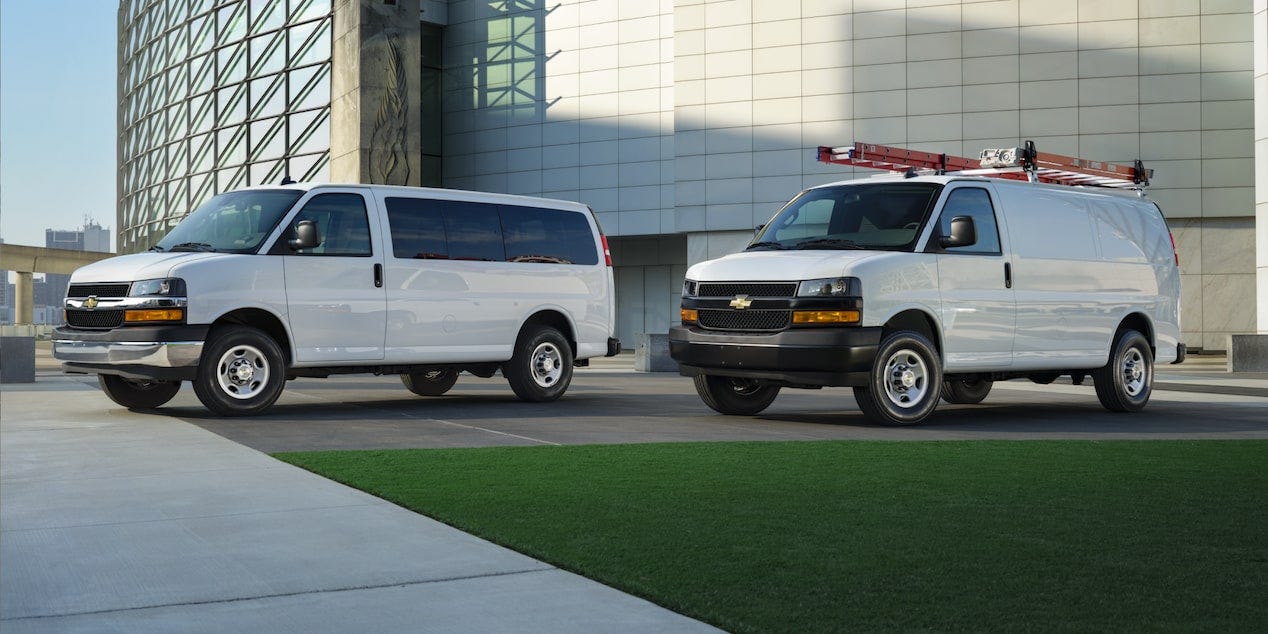
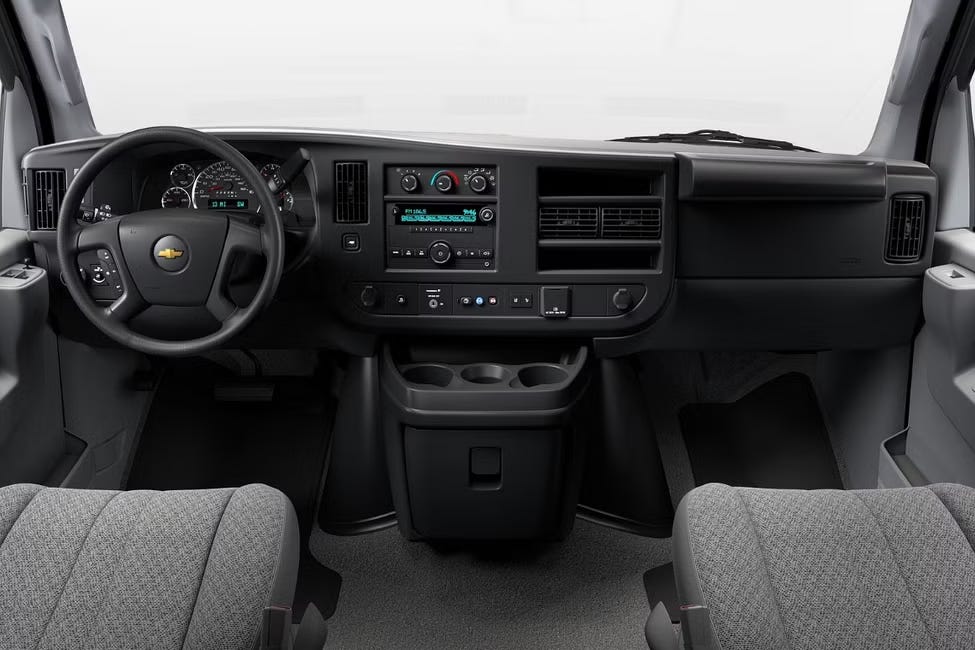
The 2020 Express 2500 Long Wheelbase we use is the same as what’s on offer from General Motors today – and demonstrably the same as what they had on offer in 1996. Thirty years of the Chevy Express as of 2026, and the only real update was a slight facelift in 2003. You could still get this van with sealed-beam headlights until 2017. Wild. It’s the industry standard for blue-collar work here in America, and you don’t stick around unchanged for three decades if there’s not a reason for it. This steel box on wheels embodies simplicity at its finest – no power doors, no center screen (besides the digital radio and clock readout), no carpet, no insulation materials to create a more comfortable drive. The footprint maximizes available cargo space by leaving the thin sheet metal uncovered, giving you extra precious inches to stuff full of cargo. Driving down the road is straightforward, too – the 6L80E transmission (at least in ours) shifts incredibly smooth, never breaking the effortless progression offered by the lazy 6L pushrod V8 rumbling away right beneath the dashboard. Simplicity, reliability, functionality. It’s the perfect uncomplicated work vehicle. Or so I believed, anyway.
On one job, there was a piece of hardware that was just too large to fit in the back of the Express, so we borrowed another team’s van – a 2020 Ford Transit 250 High Roof. Based on the global Transit van platform, this fourth generation is the first time it’s shown its face here in North America. Starting US production in 2014, it became the first real contender to challenge Chevrolet for the commercial vehicle crown. I opened the rear cargo door to load up the large hardware we had to transport and immediately was greeted by an interesting feature – double-jointed hinges allowing the door to be pushed to the side and locked in place, so they won’t even be a part of the equation when working at the rear. Hmm. Never thought of that. Pretty handy.
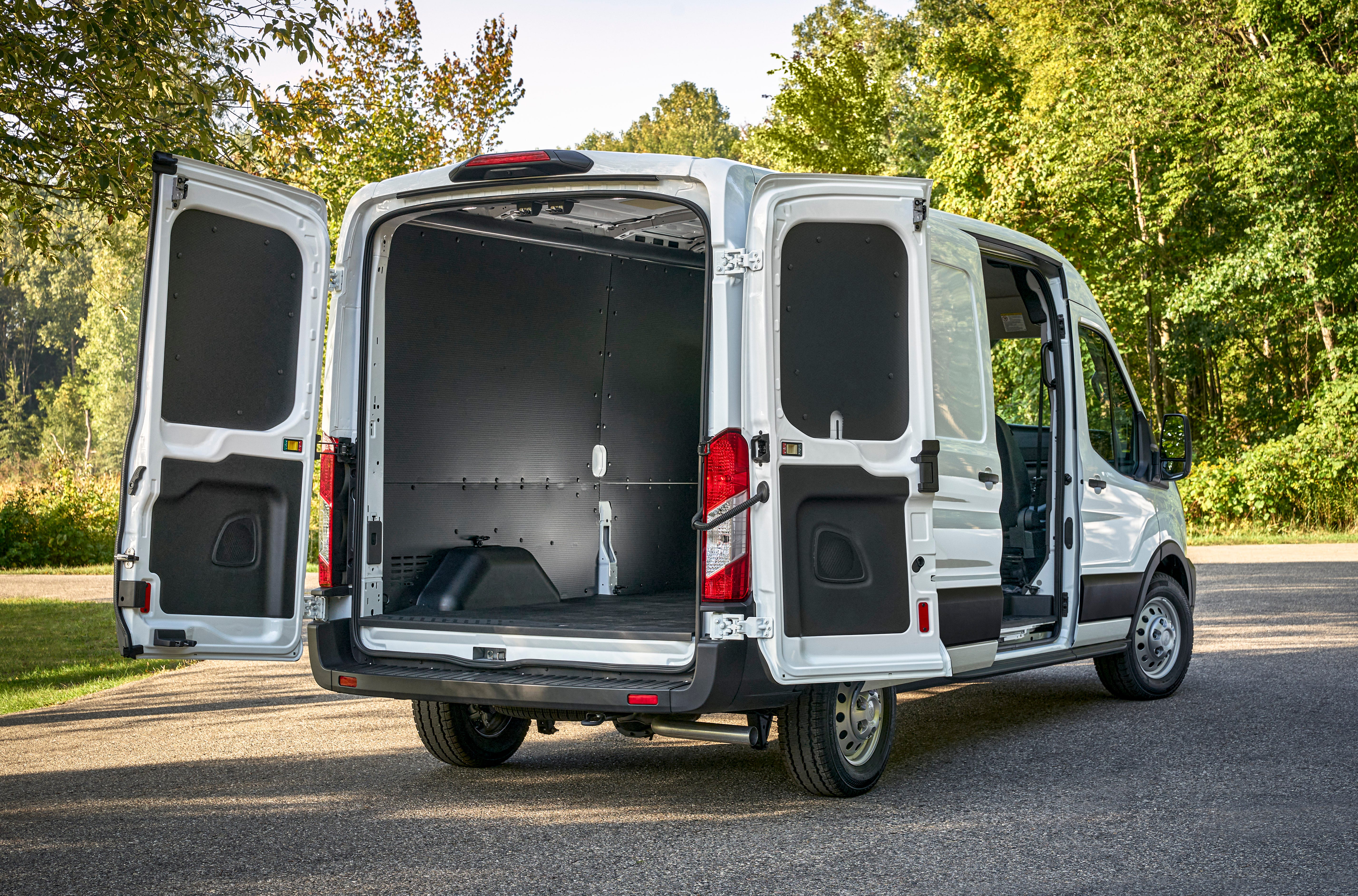
Getting everything strapped down to prevent movement, the high roof was a revelation, too – I’ve gone home hobbling with back pain from being hunched over in the work area of the Express, but I could stand straight up in the Transit. Hadn’t really considered that to be a possibility, either. Once everything was loaded and secured, I stepped into the cockpit area – and coming from the Express van, this felt like the bridge of the Starship Enterprise. I felt like it was 2007 and I was just discovering the smartphone for the first time.
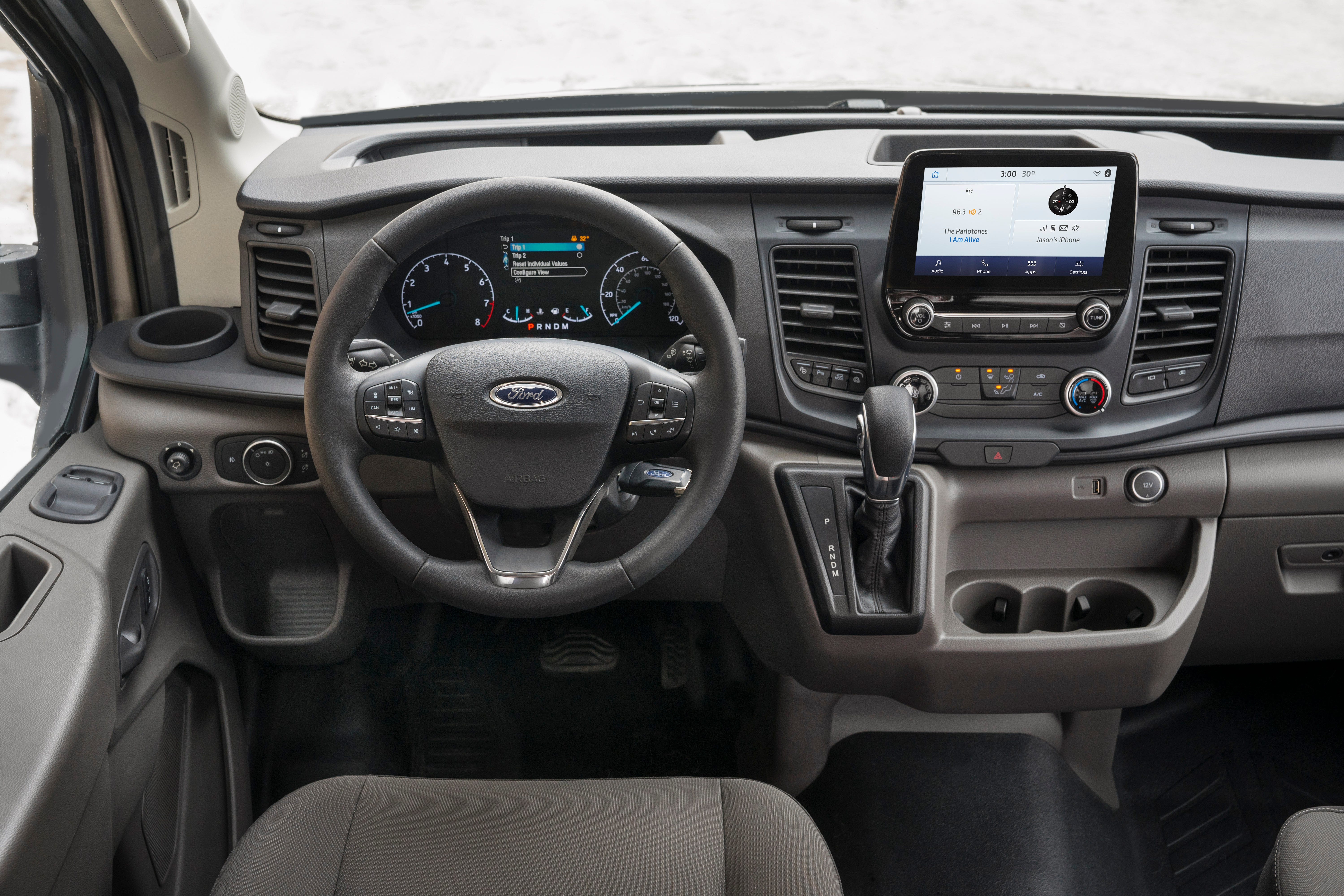
The forward visibility was incredible to behold. I could see so much out of the massive windscreen, and the giant side mirrors paired with a real central screen for the backup camera made maneuvering this absolute unit a breeze compared to the Express. The light steering reduced fatigue from driving, saving your strength and energy for the actual work at hand. The top-heaviness I thought I would experience from the high roof was negligible, and the base engine – a naturally-aspirated, 3.5L V6 – didn’t have the torque of the Chevy’s V8, but pairing it to a transmission with 10 available ratios ensured it was always able to slot itself right into the peak of the powerband.
Arriving to the destination, we used the massive sliding side door to unload the hardware, which was another revelation – the barn-door style side opening of the Express made things awkward in tight spaces. I dare you to try to maneuver a delivery when it’s trapped between those two open doors.
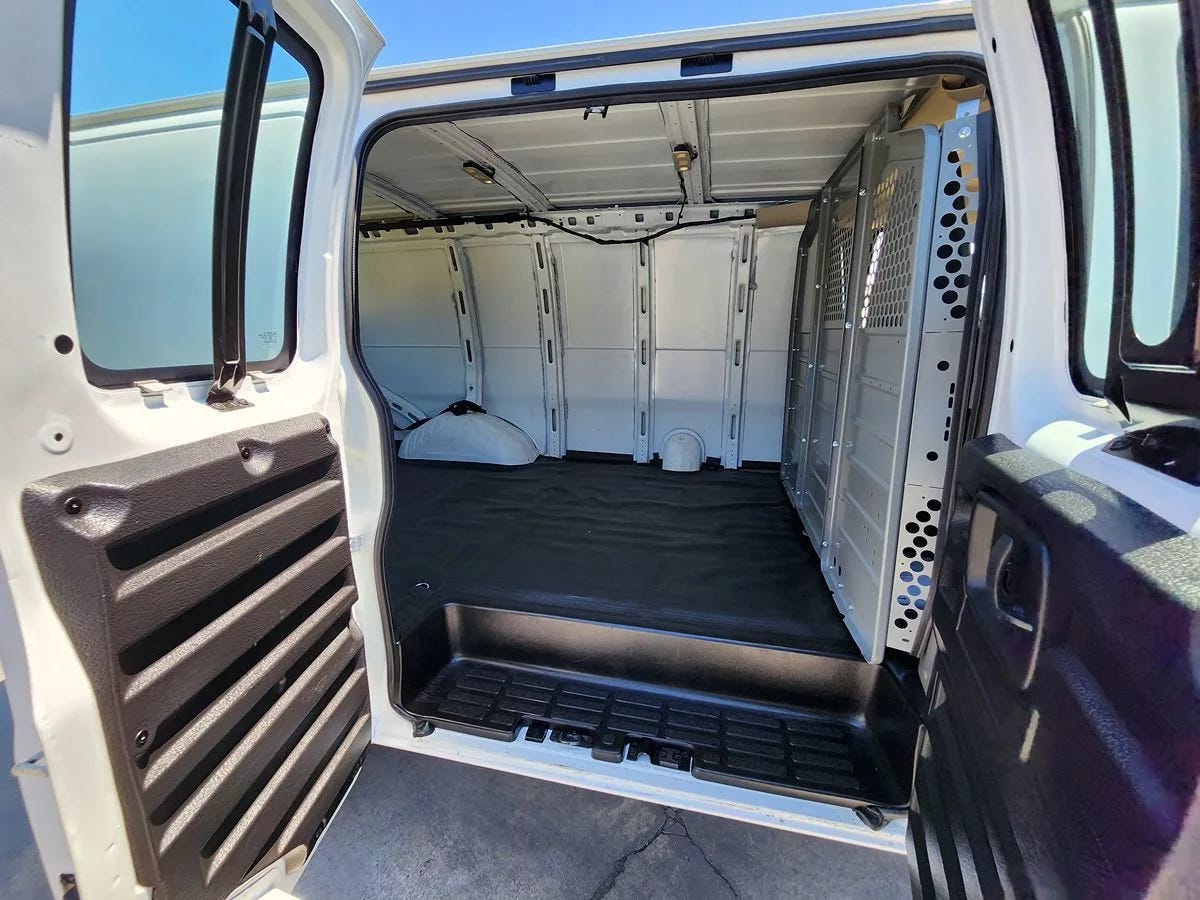
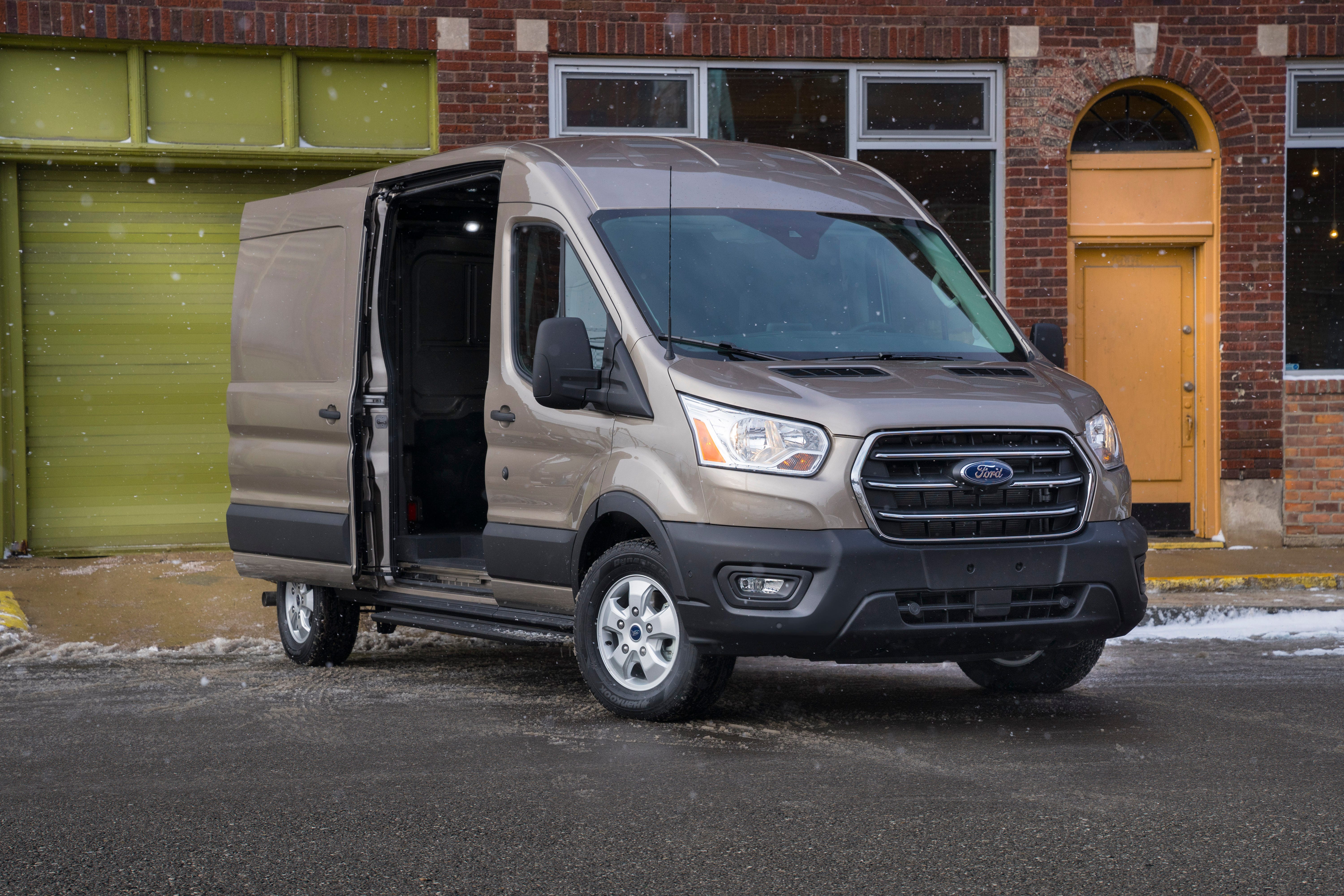
Wrapping up the job, I realized – every single aspect of the operation of a Chevy Express was improved upon in the Transit. The issues I didn’t even consider in my own head were all solved. I felt like Ford had preemptively read my mind – strange sensation. I thought about this more on the drive back.
Things started to add up – Ford actually asked the questions that Chevy hasn’t. There’s something cynical lurking under the skin of the Express that was undetectable until the Transit changed my perspective. Up until this point I had considered the Express the “perfect work vehicle”, ubiquitous due to perfection, but clearly there were improvements that could be made. The Transit exemplified that. The experience felt like suddenly jumping several decades forward in technological development because it literally was. Why hasn’t General Motors considered making changes to their commercial vehicle offering since real competition arrived in the form of the Transit? Maybe it’s because they aren’t considering the feedback from people who operate the vehicles, only the people that pay for them.
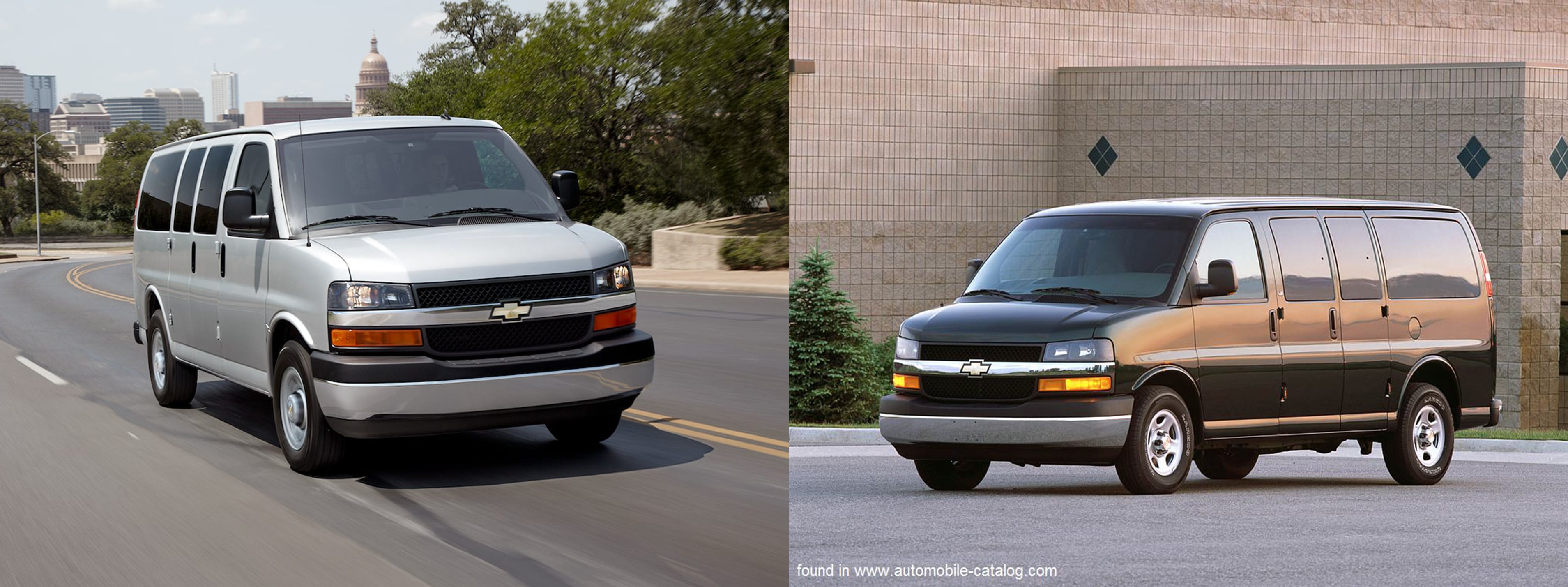
They’ll say they haven’t updated production due to customer preference – simplicity is what they’re asking for. There’s a case to be made for that, sure… using broadly the same design for thirty years breeds familiarity with technicians that work on them, and there’s just fewer systems and parts to malfunction. It’s not like it’s a real economic saver off the bat, though – the short wheelbase, V6-powered Express van now starts at just under $42,000 while the Transit will run you just under $44,000. The beneficiaries of this arrangement are really GM themselves – minimal investment in commercial vehicle development for three decades while still selling a nearly identically-priced truck. Having spent time with both, there’s literally no contest in whose package is more compelling to use for work – the Transit absolutely sweeps. There’s a two-generation gap in the design of these vans, and you can feel it immediately – a Honda Civic from 1996 and one from 2016 barely feel like they’re from the same planet. General Motors currently could deliver a replacement for the Express that’s the true “perfect work vehicle” – powertrain simplicity of the Chevrolet V8 with a modern body sat on top. Maybe ask the folks whose work pays for the truck what could be improved upon.